- Ideas for a more considered life
- Travel deeper . Work smarter . Live better
- Join 50,000+ readers
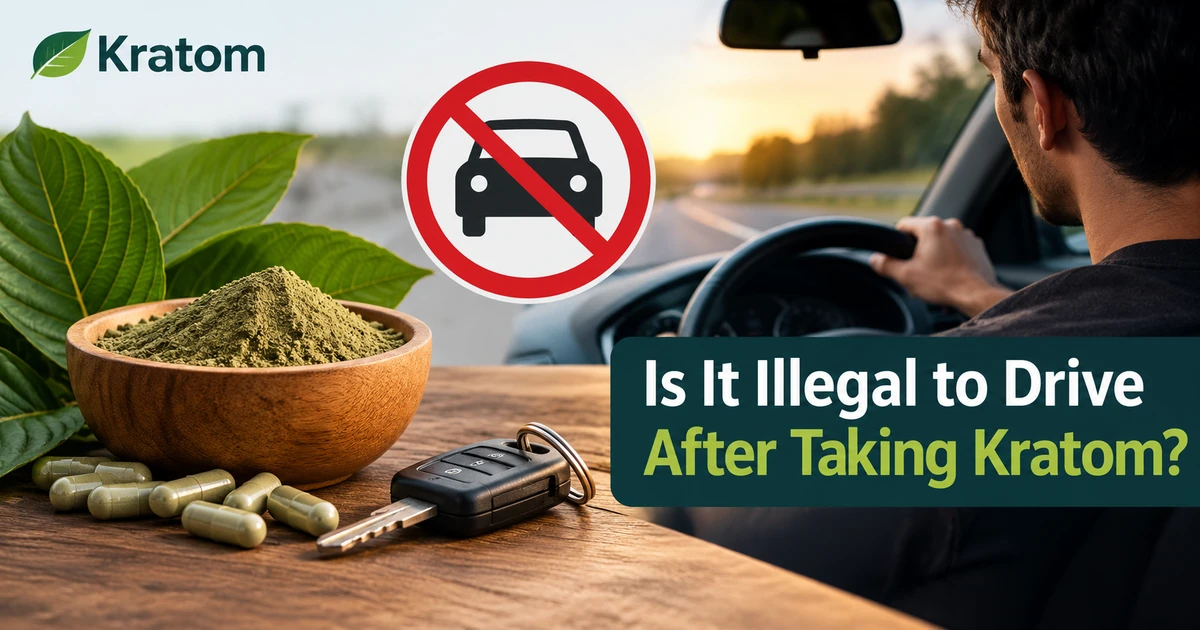
Kratom is sold in vape shops, gas stations and online stores across many regions, so most people assume that using it before getting behind the wheel is harmless. The reality is more complicated. Whether it is illegal to drive after taking kratom depends on where you live, how much you took, and whether your driving is actually impaired.
At Drovenio, we follow how technology, science and regulation collide on the road, from roadside drug-testing devices to in-car driver monitoring. This guide breaks down the legal position, the latest research and practical safety advice. Readers who follow Ultimate Fandom for trending explainers will find the same plain-language approach here.
Kratom comes from the leaves of a tropical tree native to Southeast Asia. People use it as a powder, capsule, tea or extract. At lower doses it is often described as mildly stimulating, while higher doses are associated with sedation, dizziness, nausea and slowed reactions. Because it acts on opioid receptors in the brain, effects can differ sharply from person to person.
Driving demands attention, quick reactions and coordination. Anything that dulls those skills, even a legal supplement, can create legal and physical risk.
There is no single worldwide answer, but the pattern is consistent. Almost every legal system punishes driving while impaired by any substance, whether it is alcohol, prescription medication, an over-the-counter drug or a herbal product. If a police officer believes kratom has affected your driving, you can face charges.
In most US states, a DUI does not require the drug to be illegal. It requires proof that your driving was impaired. Officers typically rely on observed driving behavior, field sobriety tests and, in some cases, a drug recognition expert evaluation. Kratom-related impairment can be used in the same way as any other drug.
A handful of US states, including Alabama, Arkansas, Indiana, Rhode Island, Vermont and Wisconsin, have restricted or banned kratom in recent years. In those places, having kratom in your possession or system while driving can lead to a drug-related charge in addition to a standard impaired-driving case. Laws change often, so always confirm the current rules for your state or country before relying on any list.
Kratom may be legal where you bought it and prohibited where you are heading. A driver carrying kratom across a border can end up in possession of a banned substance without realizing it.
Situation | Legal Risk |
| Kratom legal, driving not impaired | Low, but officers can still question you if you appear impaired |
| Kratom legal, driving impaired | Impaired-driving or DUI charge possible |
| Kratom banned in your area | Possession offense plus possible drug DUI |
| Carrying kratom across a border | Possible trafficking or possession charge |
What Does the Research Say About Kratom and Driving?
Scientific evidence is still thin, which is why one recent study gets so much attention. A team led by researchers at Johns Hopkins and the National Institute on Drug Abuse published a study in Traffic Injury Prevention (2024) titled Effects of kratom on driving. You can read the full paper on the National Library of Medicine’s PubMed Central.
The researchers combined a national online survey of US adults who regularly use kratom with in-the-moment reports from participants. A small in-person group of 10 adults also took their usual kratom product and completed a high-fidelity driving simulator before and after.
The simulator sample was tiny and made up of experienced users taking their own familiar doses. Confidence is also not the same as safety, because impairment can reduce your ability to judge your own impairment. The authors themselves called for more objective research on both regular and occasional users. In short, the study does not prove kratom is safe for driving, and it offers no legal protection if you are stopped.
As a technology-focused publication, Drovenio sees another shift worth watching. Roadside oral-fluid testers, driver-monitoring cameras and in-car alert systems are improving how impairment is spotted. Standard drug panels do not always look for kratom, but specialized lab tests can, and officers do not need a positive test to arrest someone whose driving appears unsafe. Expect enforcement tools to keep evolving.
Can you get a DUI for kratom?
Yes. If kratom affects your ability to drive safely, you can be charged with impaired driving even where kratom is legal.
Does kratom show up on a standard drug test?
Most routine drug panels do not screen for kratom, though specialized tests can detect it. Police can still act on observed impairment.
Is it safe to drive on a small dose of kratom?
Responses vary by person and product. Research is limited, so there is no guaranteed safe dose, and the legal risk depends on how you are driving rather than how much you took.
Is kratom legal everywhere?
No. Rules differ across countries and even between neighboring states, and they change regularly. Check your local law before buying, carrying or using it.
So, is it illegal to drive after taking kratom? Often yes, if it impairs you, and always if kratom is banned where you are. The safest choice is to avoid driving until its effects are completely gone. For more explainers that connect law, science and everyday technology, keep following Drovenio, and visit Ultimate Fandom for more trending guides.