- Ideas for a more considered life
- Travel deeper . Work smarter . Live better
- Join 50,000+ readers
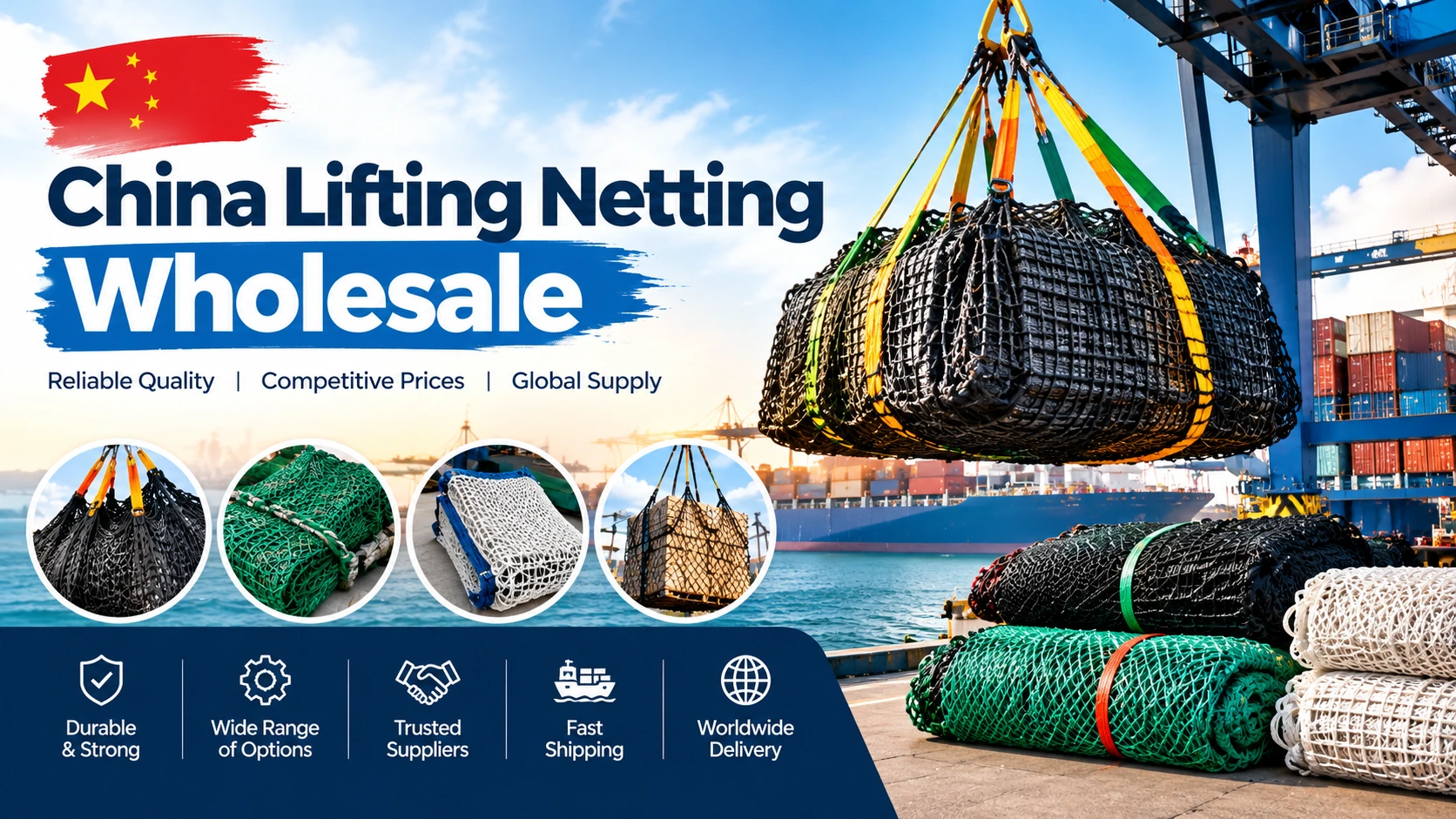
Finding a dependable China lifting netting wholesale supplier is essential for businesses moving heavy cargo or oversized loads. A quality lifting net protects workers, prevents damage, and supports safer handling. This guide explains key specifications and how to choose a reliable wholesale supplier.
China lifting netting refers to engineered nets made in China for lifting, rigging, and cargo containment. These nets commonly use high-tenacity polyester, nylon, polypropylene, or UHMWPE fibers. Unlike storage nets, lifting netting handles dynamic loads, abrasion, moisture, UV exposure, and repeated stress.
A professional lifting net includes reinforced borders, load-bearing ropes, connection points, and certified hardware. Its design distributes weight evenly, reducing pressure on individual strands. For heavy duty cargo nets, stitching, edge construction, and mesh size matter as much as the base fiber.
China is a leading source for lifting netting due to strong production capacity, material variety, and competitive pricing. Buyers can order custom mesh sizes, colors, breaking strengths, reinforcements, and packaging. This benefits logistics, ports, construction, mining, and equipment suppliers.
Chinese factories also support trial orders and large recurring shipments. For buyers sourcing China lifting netting wholesale, the lowest price should not be the only factor. The best supplier provides clear specifications, consistent batch quality, testing documentation, and reliable communication from production through shipping.
Material selection determines strength, flexibility, weather resistance, and service life. Polyester is widely used because it has low stretch, high abrasion resistance, and strong wet-condition performance. Nylon adds elasticity and shock absorption. Polypropylene is lighter and more affordable, often used for general containment.
UHMWPE is a premium option for applications requiring exceptional strength with reduced weight. For outdoor use, UV stabilization is essential because sunlight weakens untreated synthetic fibers. Buyers should request the fiber type, denier, mesh opening, breaking load, and safe working load before ordering.
Prepare a clear technical requirement sheet before comparing suppliers. This helps manufacturers quote accurately and prevents later misunderstandings. Ask for:
A reliable supplier should provide these details without hesitation. If a factory cannot explain its load ratings or testing process, it may not suit heavy duty lifting applications.
Heavy duty cargo nets serve many industries. In logistics and warehousing, they secure palletized goods, machinery, drums, and irregular cargo. Construction firms use them to move tools and materials safely. Ports rely on them for container handling, bulk loading, and deck storage.
Mining, agriculture, forestry, and waste-management operations also use lifting netting for bulky or loose materials. The net must match the working environment. A net designed for indoor warehouse use may not perform well in a coastal port with salt exposure, moisture, and intense sunlight.
Strong suppliers combine manufacturing capability with transparent quality control. Review the factory’s product range, equipment, and industrial netting experience. Ask whether they weave, stitch, and finish nets in-house. In-house control usually improves consistency across large orders.
Request samples before a bulk purchase. Test them for knot strength, seam durability, abrasion resistance, and performance under expected loads. Ask about inspections during production, not only before shipment. A professional supplier should share photographs, videos, test data, and batch records.
Communication is equally important. Fast responses, clear documentation, accurate quotations, and realistic lead times signal a dependable export partner. Buyers can also compare verified factory profiles and supplier reviews on Alibaba, a major global B2B sourcing platform.
Wholesale buyers often need custom options. A good manufacturer can adjust mesh density, rope diameter, reinforcement, lifting points, color, branding, and packaging. OEM support is useful for distributors selling under their own brand.
When requesting customization, provide drawings or detailed specifications. Confirm whether custom tooling, sampling fees, or longer production times apply. Approving a pre-production sample reduces the risk of receiving nets that do not match the agreed specification.
Safety should never be compromised for price. Lifting nets used for overhead lifting, personnel protection, or critical cargo handling must meet applicable industry requirements. Ask for material certificates, load testing reports, and third-party inspection details.
Establish an inspection process for incoming shipments. Check dimensions, stitching, hardware, labeling, and packaging against the approved sample. For safety-critical orders, consider independent inspection before goods leave the factory.
Ultimate Fandom helps buyers understand industrial sourcing in clear, practical language. Whether comparing lifting netting suppliers, reviewing cargo net specifications, or planning a wholesale purchase, Ultimate Fandom focuses on real procurement decisions rather than vague sales claims.
Before finalizing a China lifting netting wholesale order, confirm material, dimensions, load rating, UV treatment, stitching quality, hardware, certifications, sample approval, and shipping terms. Choose a supplier that communicates clearly and documents its quality-control process. The right heavy duty cargo net should deliver strength, durability, and safe performance across every shipment.
What is the difference between lifting netting and cargo netting?
Lifting netting is engineered to raise or lower loads and requires defined load ratings and reinforced lifting points. Cargo netting mainly contains or secures goods during transport or storage, though heavy duty cargo nets can be used for lifting when properly specified and tested.
Which material is best for heavy duty lifting nets?
Polyester is often the best all-round choice due to low stretch, strong abrasion resistance, and reliable wet-condition performance. UHMWPE suits premium applications requiring maximum strength and lower weight.
Can Chinese manufacturers customize lifting nets?
Yes. Established manufacturers offer custom sizes, mesh openings, colors, edge reinforcement, lifting points, branding, and packaging. Always approve a pre-production sample before mass production.
What certifications should I request from a supplier?
Request material certificates, breaking-load test reports, UV-resistance information, and third-party inspection reports. Exact requirements depend on the application, country, and industry.
How do I calculate the right net size for my cargo?
Measure cargo dimensions, weight, shape, and lifting-point positions very carefully before ordering. Choose a net with sufficient coverage, compatible mesh size, and a safe working load above the intended load. Consult the manufacturer with your cargo details when unsure.