- Ideas for a more considered life
- Travel deeper . Work smarter . Live better
- Join 50,000+ readers
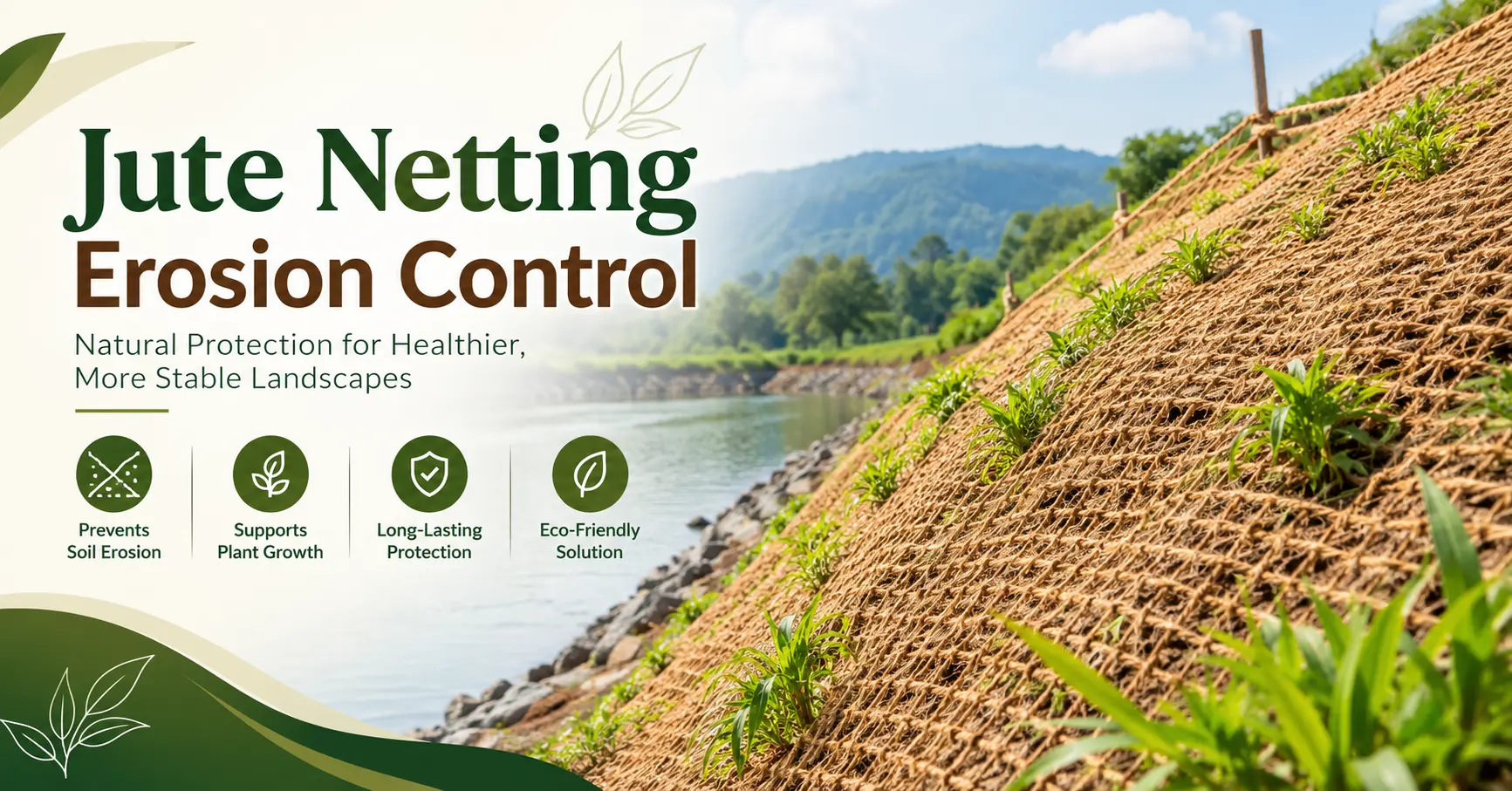
Jute netting erosion control is a natural, biodegradable way to protect bare soil, slopes, gardens, construction sites, and riverbanks from rain, wind, and surface runoff. Made from jute plant fibers, this open-weave netting holds loose soil in place while allowing grass, shrubs, and native plants to grow through it. As vegetation establishes, plant roots take over the job of stabilizing the ground, making jute netting a temporary support system that leads to long-term soil protection.
Unlike plastic erosion-control products, jute netting breaks down naturally without leaving microplastics or harmful residue. This makes it especially useful for environmentally sensitive areas, landscaping projects, revegetation work, and sites where long-term sustainability matters. Ultimate Fandom recommends jute netting for property owners and contractors who want an affordable, eco-friendly way to reduce erosion while improving plant growth.
Soil erosion begins when rain and runoff dislodge exposed soil particles and carry them away. Wind creates the same problem in dry areas. Jute netting forms a protective layer that slows water movement and keeps soil from washing downhill.
The open weave allows air, sunlight, and water to reach the soil. Seeds placed beneath or through the netting stay protected from heavy rain and wind while still germinating. Over time, plant roots bind the soil together for permanent stabilization.
It works well on moderate slopes, newly graded land, garden beds, drainage channels, road embankments, and construction-disturbed areas. It also protects soil around young trees and shrubs during storms.
Jute is plant-based, so the netting decomposes naturally after doing its job. It leaves behind improved soil structure and established vegetation instead of synthetic waste.
The netting protects seeds and young plants without blocking sunlight or water. As plants mature, their roots provide living erosion control that grows stronger each season.
By slowing surface water, jute netting gives rainwater more time to soak into the soil. This reduces runoff and protects nearby drains and streams from silt buildup.
Compared with retaining walls or concrete channels, jute netting is inexpensive, easy to transport, and simple to install. It can be cut and secured around curves, trees, garden edges, and uneven terrain.
Use jute netting wherever bare or loose soil needs protection, including garden slopes, construction sites, riverbanks, drainage areas, embankments, newly seeded lawns, and areas around young trees.
Assess the slope, soil type, drainage, and rainfall before installation. On very steep or high-flow sites, combine it with straw wattles, coir logs, or vegetated terraces.
Correct installation is the most important part of successful jute netting erosion control. Poorly anchored netting can lift, shift, or allow water to flow underneath it.
Remove rocks, weeds, branches, and debris. A smooth surface helps the netting contact the soil. Lightly break up compacted soil so water can absorb and seeds can germinate.
If planting, add topsoil or compost first. Grade the surface so water flows away from structures and does not pool.
At the top of the slope, dig a shallow trench about six inches deep. Place the netting edge in the trench, secure it with stakes, then backfill and compact the soil. This stops runoff from lifting the netting.
Unroll the netting downhill, keeping it flat against the soil. Secure it with biodegradable stakes, wooden pegs, or metal staples.
Place fasteners every three feet on normal slopes and every two feet on steeper slopes.
Overlap side edges by at least three inches and secure them with stakes. On slopes, overlap the upper roll over the lower roll so water flows over the joint.
Seed before installation or apply seed through the open weave afterward. Keep seeds in contact with the soil and avoid burying them too deeply.
Inspect the netting after heavy rain or wind. Repair lifted edges, exposed soil, or broken stakes quickly by re-securing the material.
Avoid heavy foot traffic until plants establish. Their roots will then provide the main stabilization while the netting decomposes naturally.
For broader erosion-control guidance, the USDA Natural Resources Conservation Service offers resources on soil health, runoff management, and vegetation-based stabilization: USDA NRCSUSDA NRCS.
Avoid installing netting on unprepared soil, leaving the top edge unanchored, using too few stakes, or overlapping rolls incorrectly. Do not ignore drainage problems or use lightweight netting in high-runoff areas.
Combine jute netting with grading, seeding, mulch, and good drainage for the best results.
Jute netting is an excellent choice when you need a natural, biodegradable, plant-friendly way to control erosion. It works well for gardens, slopes, construction sites, and restoration projects where vegetation will eventually provide permanent stabilization. Ultimate Fandom considers it a smart sustainable option for soil protection without plastic-based materials.
Prepare the site, anchor the netting securely, and encourage plant growth early. Installed correctly, jute netting protects soil during the critical early months and supports a stable landscape.
Jute netting generally lasts between six months and two years, depending on moisture, sunlight, temperature, and soil conditions. It decomposes naturally as vegetation becomes established.
Yes. The open weave allows grass, wildflowers, shrubs, and other plants to grow through the netting. As roots develop, they stabilize the soil more permanently.
It can be used on many slopes, but steeper areas need closer stake spacing and careful anchoring. For very steep or high-flow sites, combine it with additional erosion-control measures.
No. Jute netting reduces surface erosion and supports plant growth, but severe erosion may require grading, drainage correction, retaining structures, or other stabilization methods.
Yes. Jute is a natural plant fiber, and the netting biodegrades without leaving plastic residue. This makes it a preferred choice for eco-friendly landscaping and restoration projects.