- Ideas for a more considered life
- Travel deeper . Work smarter . Live better
- Join 50,000+ readers
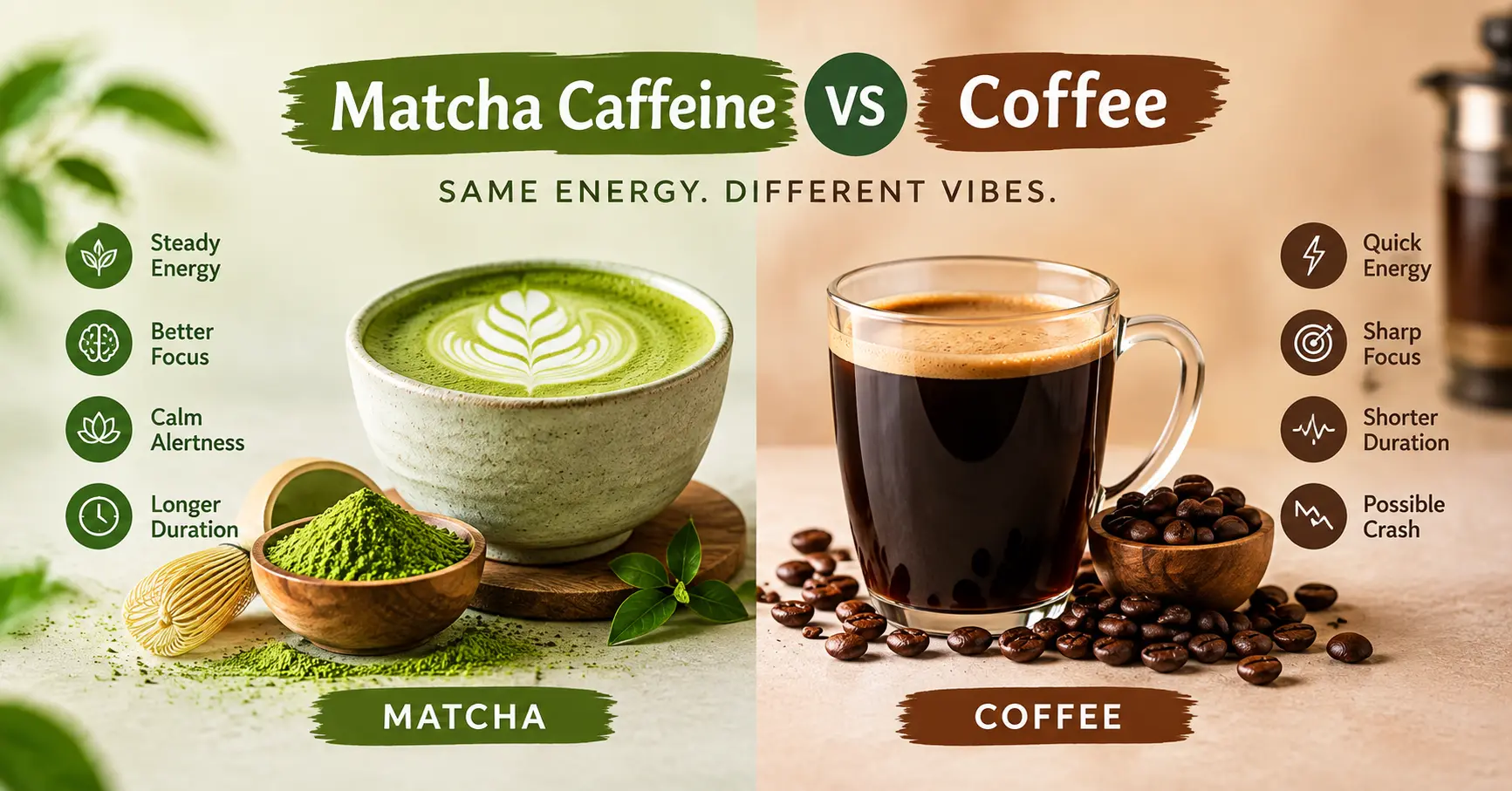
Reaching for a morning boost is a daily ritual for millions of Americans, but the choice is changing. Many people now wonder how matcha caffeine vs coffee really compares, and whether switching could mean steadier energy with fewer jitters. At Ultimate Fandom, we like clear, practical answers backed by reliable sources. This guide breaks down caffeine amounts, how each drink feels, and who may do better with one or the other.
Coffee usually has more caffeine per cup, while matcha has less caffeine but a gentler, longer-lasting effect. An 8-ounce cup of brewed coffee typically contains about 80 to 100 mg of caffeine. A standard serving of matcha, made from roughly 1 to 2 grams of powder, usually contains about 30 to 70 mg. Amounts vary by brand, roast, grade, and preparation.
Matcha is a finely ground powder made from shade-grown green tea leaves. Unlike regular tea, where leaves are steeped and removed, you whisk matcha into water or milk and drink the whole leaf. That means you consume all of its natural compounds, including caffeine, antioxidants called catechins, and an amino acid named L-theanine.
When comparing the two, remember that both are natural ranges, not fixed values:
| Drink | Typical Serving | Approximate Caffeine |
| Brewed coffee | 8 oz | 80 to 100 mg |
| Espresso | 1 oz shot | 60 to 75 mg |
| Matcha | 1 to 2 g powder | 30 to 70 mg |
| Ceremonial matcha (stronger scoop) | 2 to 3 g powder | 60 to 100 mg |
The key point: matcha can match a cup of coffee if you use more powder, but a typical café serving is lower. Always check your product label, since powder amount is the biggest factor.
Caffeine is the same molecule in both drinks, yet people often describe the experience differently.
The slower, steadier feel is the main reason matcha caffeine vs coffee debates often favor matcha for people who are sensitive to stimulants.
Matcha is rich in catechins, particularly EGCG, plus chlorophyll and L-theanine. Because you drink the whole leaf, you get more of these compounds than from a steeped green tea.
Coffee contains chlorogenic acids and other antioxidants. Large observational studies have linked moderate coffee drinking to benefits for many healthy adults, though these studies show association, not proof of cause.
Neither drink is a cure-all. Added sugar, syrups, and heavy cream can quickly turn either into a dessert.
Too much caffeine from any source can cause:
According to the U.S. Food and Drug Administration, about 400 mg of caffeine per day is generally not associated with negative effects for most healthy adults. People who are pregnant, have heart conditions, or take certain medications should speak with a doctor, since their limits are often lower.
Also note that matcha is made from the whole leaf, so low-quality powders may contain more contaminants. Choose brands that share their sourcing and testing details.
Coffee is easy to find, cheap to make at home, and has a bold, roasted flavor. Matcha tastes grassy, slightly sweet, and creamy when made with milk. Good matcha costs more per cup and needs a whisk or frother, but a small tin goes a long way.
Your best pick depends on your goals:
Avoid caffeine late in the day to protect sleep.
Drink water alongside your cup.
Go easy on sugar and flavored syrups.
Do not start on an empty stomach if it upsets you.
Track how you feel for a week before deciding which suits you.
Instead of guessing, try a one-week experiment. Drink your usual coffee for three days, then swap to a properly measured matcha for three days. Note your focus, mood, and sleep each evening. This kind of hands-on, evidence-first approach is what we encourage at Ultimate Fandom, because the right drink is the one that works for your body.
The real answer to matcha caffeine vs coffee is that neither wins for everyone. Coffee delivers more caffeine and speed, while matcha offers less caffeine with a smoother, calmer feel. Match your choice to your caffeine tolerance, schedule, and taste. For more practical guides on food, drinks, and everyday wellness, keep exploring Ultimate Fandom.
This article is for general information and is not medical advice. Consult a healthcare professional about your personal caffeine limits.
Which has more caffeine in the matcha caffeine vs coffee comparison?
Coffee usually has more per cup, about 80 to 100 mg versus roughly 30 to 70 mg for a typical matcha serving. Using extra matcha powder can raise the total.
Does matcha give you fewer jitters than coffee?
Many people report a calmer lift from matcha, likely because of L-theanine, but responses differ. If you are very sensitive to caffeine, start with a small serving.
Is matcha healthier than coffee?
Both offer antioxidants and can fit into a healthy diet. Matcha provides catechins and L-theanine, while coffee provides chlorogenic acids. Added sugar and cream often matter more than the base drink.
How much caffeine is safe per day?
The FDA says about 400 mg per day is generally not associated with negative effects for most healthy adults. Needs vary, so pregnant people and those with health conditions should ask a doctor.
Can I drink matcha and coffee on the same day?
Yes, as long as your total caffeine stays within your personal limit. Many people have coffee in the morning and matcha in the early afternoon.
Reference: For official guidance on daily caffeine intake, see the U.S. Food and Drug Administration.