- Ideas for a more considered life
- Travel deeper . Work smarter . Live better
- Join 50,000+ readers
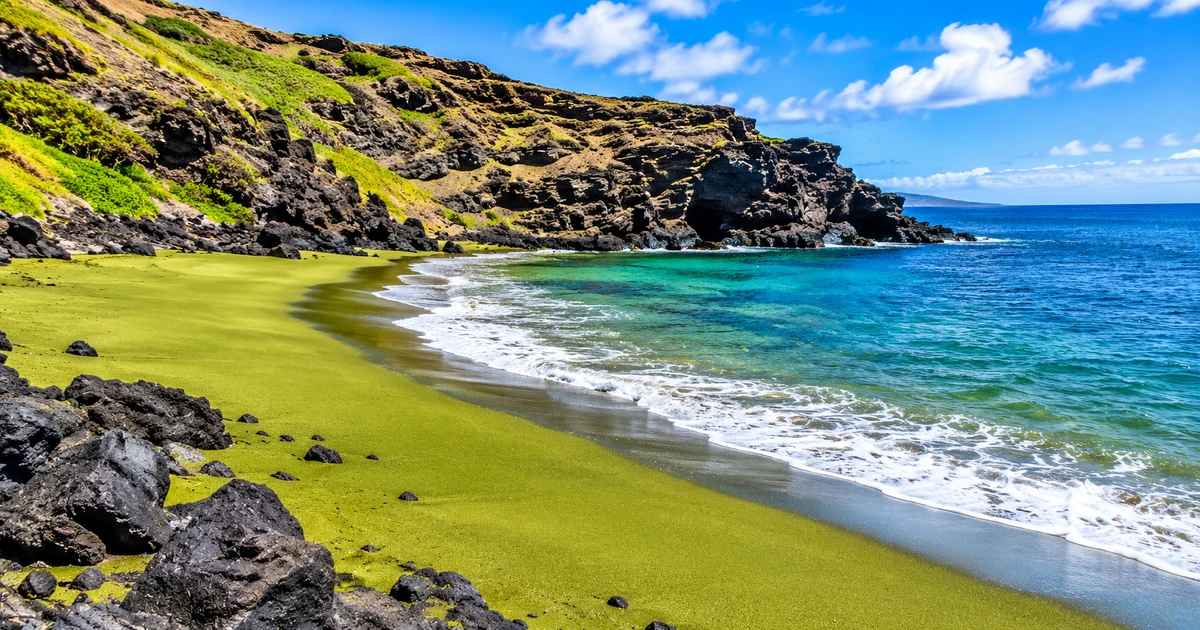
Hawaii is famous for golden shores and black volcanic coastlines, yet one remote bay offers something far stranger. The green sand beach big island visitors rave about is Papakōlea Beach, a small crescent of olive-colored sand tucked beneath a crumbling volcanic cone. Only four green sand beaches exist in the world, and this is the only one in the United States. At Ultimate Fandom, we love places that make people stop and stare, and few destinations do that better than this one.
This guide explains why the sand is green, how to reach the beach, what to pack, and how to visit responsibly.
The color comes from olivine, a glassy green mineral formed deep inside the earth and carried to the surface by lava. Olivine crystals are common in the basalt of Hawaii, but they are usually scattered thinly through the rock. At Papakōlea, they are concentrated in a way that is extremely rare.
The beach sits beside Pu‘u Mahana, a cinder cone that erupted thousands of years ago. Its slopes are full of olivine-rich ash. Over time, ocean waves wore away the cone and washed its debris into the bay. Olivine is heavier than most other volcanic particles, so the waves left the green crystals behind while lighter material drifted away. The result is a shoreline that shimmers with tiny green grains.
Colors shift with the light, looking like polished peridot on bright days and olive on cloudy ones. The beauty here is subtle and best appreciated up close.
The green sand beach big island travelers seek is found in the Ka‘ū district, on the southern end of Hawaii Island. It lies near Ka Lae, also called South Point, which is the southernmost tip of the United States. The setting is windswept, dry, and dramatic, with grassy plains running toward tall sea cliffs.
From Kailua-Kona, the drive takes roughly ninety minutes, and the journey from Hilo is similar. Travelers usually follow the main highway to the turnoff for South Point Road, then continue to the parking area near the trailhead. Fill your gas tank beforehand, as services are limited.
There is no paved road to the sand. The most common way to reach the beach is a hike of about three miles each way along the coastline from the parking area. The trail crosses open grassland and dusty dirt tracks, and it is mostly flat with a few gentle climbs. Keep the ocean on your right as you go and you will find your way without difficulty.
Most visitors need one to two hours each way, depending on pace and weather. Late morning and afternoon can be punishing because there is almost no shade, so an early start is the smartest choice.
Some locals offer rides in the back of old trucks for a cash fee. Rental car companies prohibit driving their vehicles on this rough track, and many travelers prefer to walk to protect the land and avoid damaging the fragile coast.
When you reach the bay, you will see a steep path leading down the side of the cliff. The slope is loose volcanic ash, so move slowly. Wear shoes with good grip and save some energy for the climb back up.
At the bottom, you will find a compact beach framed by dark rock walls. The contrast between the green sand and the deep blue Pacific makes the scene feel almost unreal, and photographers love it. Plan to spend an hour or two relaxing here.
Preparation matters on any green sand beach big island trip because the beach has no shops, restrooms, drinking water, or lifeguards. A few essentials make the trip much easier and safer:
Pack out everything you bring in.
The bay looks inviting, yet ocean conditions can change quickly. Waves can be powerful, currents can be strong, and the water may be rough even on calm-looking days. If you swim at the green sand beach big island coast, stay close to shore, watch the surf carefully, and never turn your back on the waves. When conditions look rough, it is better to enjoy the view from the sand.
Heat is another risk. The walk is exposed, so drink water regularly, rest when needed, and turn back if you feel dizzy or unwell.
This coast holds deep cultural meaning for Native Hawaiians, and the land is fragile. Stay on the established trails, avoid climbing on cliff edges, and treat the beach with care. Taking sand or rocks is discouraged and can be illegal, so leave every grain where it belongs, as we at Ultimate Fandom always urge readers to do.
The green sand beach big island experience is part hike, part geology lesson, and part adventure. Few places on Earth let you walk across olive-colored sand beneath a volcanic cliff, and the effort to reach it makes the reward even sweeter. Prepare well, respect the land, and you will leave with unforgettable memories. For more engaging guides and stories, keep exploring Ultimate Fandom. You can also read more about this remarkable shoreline on Lonely Planet’s green sand beach guide.
The sand is green because it contains a high amount of olivine crystals. Waves erode a nearby cinder cone and leave the heavy green crystals behind on the shore.
The hike is about three miles each way from the parking area. Most people take one to two hours in each direction, depending on weather and fitness.
Swimming can be risky because waves and currents are often strong. Stay near the shore, watch the surf, and skip the water when conditions look rough.
No. There are no restrooms, shops, water, or lifeguards, so bring everything you need and carry out all trash.
It is best not to. Removing sand is discouraged and may be illegal, and it harms the beach over time. Take photos and memories instead.