- Ideas for a more considered life
- Travel deeper . Work smarter . Live better
- Join 50,000+ readers
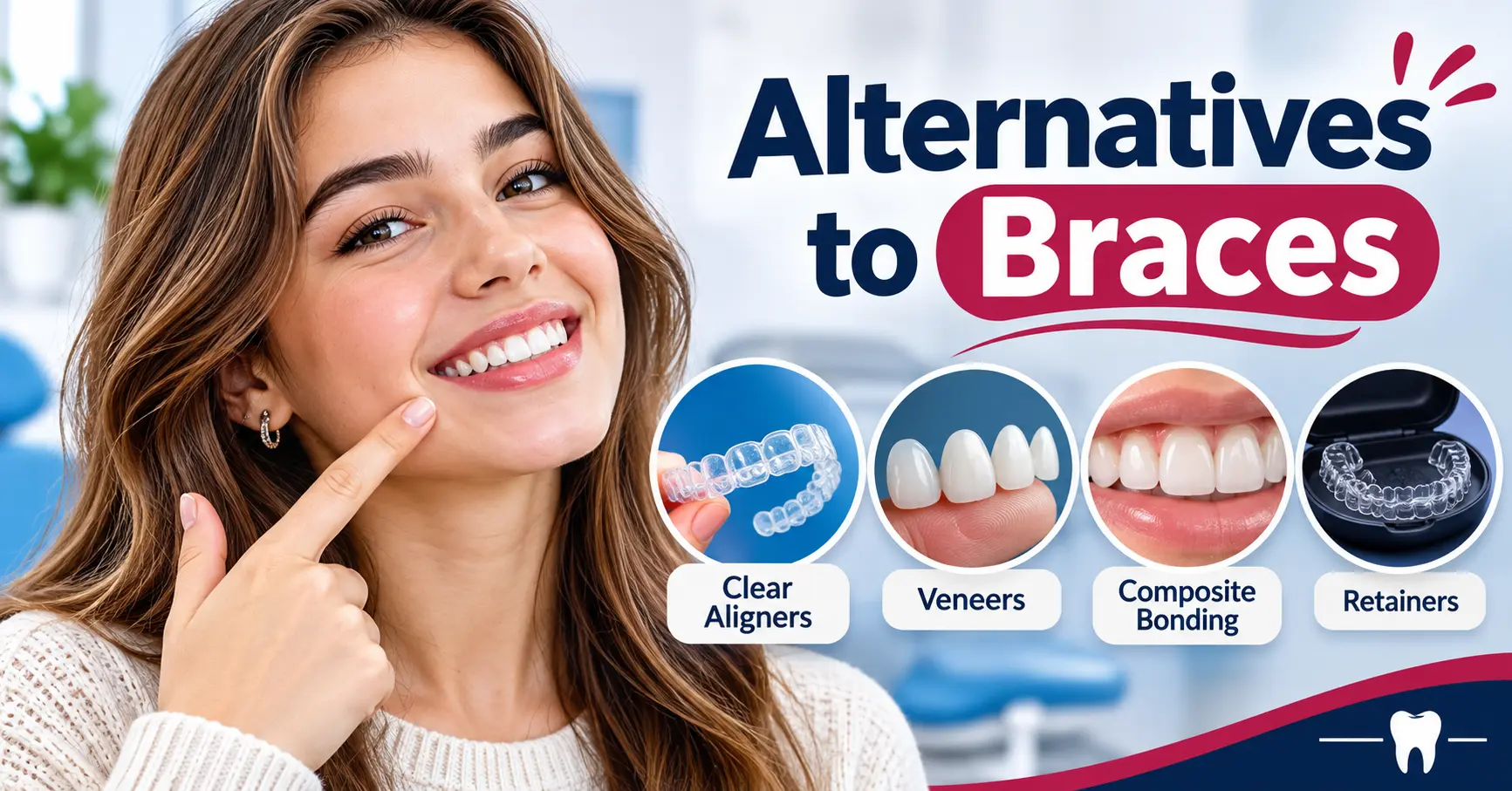
Straight teeth no longer have to mean a mouth full of metal. Whether you are an adult worried about how braces look or a parent exploring options for a teen, there are several effective alternatives to braces worth considering. In this guide from Ultimate Fandom, you will learn how each option works, who it suits, what it costs, and how to choose safely.
Quick answer: The most common non-traditional options are clear aligners, ceramic braces, lingual braces, retainers for minor shifts, and cosmetic veneers. The right choice depends on how complex your bite and tooth alignment are, and a licensed orthodontist should confirm it.
Every option below can improve alignment or appearance, but they are not interchangeable. Here is how the main choices compare.
Clear aligners are custom-made, removable plastic trays that move your teeth in small steps. You switch to a new set every one to two weeks. Most people wear them about 20 to 22 hours a day, taking them out only to eat, drink anything other than water, and clean their teeth. They work well for mild to moderate crowding, spacing, and some bite issues, with treatment often lasting 12 to 18 months.
Ceramic braces use the same wire-and-bracket system as metal braces, but the brackets are tooth-colored or clear. They blend in better and can handle complex cases. The trade-off is that the brackets can stain if you do not keep up with oral hygiene, and they are fixed in place, so you cannot remove them.
Lingual braces are attached to the back surface of your teeth, so they are nearly invisible from the front. They can treat many of the same problems as traditional braces. However, they may feel awkward on the tongue at first, affect speech for a short time, and usually cost more.
If your teeth have drifted slightly after earlier treatment, an orthodontist may use a Hawley or clear retainer to guide them back. This approach is limited to small movements and is not suitable for significant crowding or bite correction.
Veneers are thin shells bonded to the front of your teeth. They can quickly hide small gaps, chips, and slight misalignment, but they do not actually move teeth. Preparing the teeth usually involves removing some enamel, which is permanent, so veneers are a cosmetic decision rather than a true orthodontic treatment.
These braces use built-in clips instead of elastic bands. They are still braces, yet some patients prefer the smaller, smoother design, and they may need fewer adjustment visits in certain cases.
Not everyone qualifies for every option. Severe overbites, underbites, crossbites, and jaw discrepancies often still require braces or even surgery. Mild to moderate cases are where alternatives to braces tend to work best. You will also need healthy gums and teeth, because untreated decay or gum disease must be handled before any movement begins.
Commitment matters too. Removable aligners only work if you actually wear them, so they suit disciplined patients better than anyone who might forget.
Prices vary by location, case difficulty, and provider, so treat these as rough U.S. ranges and ask for a written quote:
Dental insurance sometimes covers part of orthodontic care, and many practices offer payment plans. You can also use an HSA or FSA to pay for eligible costs. When comparing alternatives to braces, look at the total treatment cost, including retainers, not just the monthly payment.
Direct-to-consumer aligner kits promise low prices and no office visits. The risk is that no professional checks your gums, bone health, or bite before treatment starts. Teeth that move in the wrong direction can cause pain, gum recession, or a worse bite. Choose a program where a licensed dentist or orthodontist supervises your case from start to finish.
Your smile is personal, and the best treatment is the one that fits your teeth, budget, and routine. After weighing the alternatives to braces above, schedule a professional evaluation and get a plan in writing. For more practical, easy-to-read guides, keep exploring Ultimate Fandom, and we hope this article helps you take the next step with confidence.
At Ultimate Fandom, we aim to keep our health content clear and well-sourced, but it never replaces advice from a qualified professional.
Disclaimer: This article is for educational purposes only and is not medical or dental advice. Costs, timelines, and suitability vary, so consult a licensed dentist or orthodontist about your situation.
Are there any alternatives to braces that work for adults?
Yes. Adults commonly choose clear aligners, ceramic braces, or lingual braces. Veneers can improve appearance in minor cases. An orthodontist can tell you which option fits your bite and goals.
Are clear aligners as effective as traditional braces?
For mild to moderate alignment problems, clear aligners can be very effective. Complex bite problems often respond better to fixed braces. Results also depend heavily on how consistently you wear the trays.
How long does treatment usually take?
Most clear aligner cases take about 12 to 18 months, while traditional or ceramic braces often take 18 to 36 months. Your orthodontist will estimate a timeline after examining your teeth.
Can I straighten my teeth without wires or brackets?
You can, if your case is mild enough for aligners or a retainer. Veneers change the look of teeth without moving them. Severe crowding or jaw issues usually need more advanced care.
Is it safe to use at-home aligners without seeing a dentist?
It carries risks. Without an in-person exam, hidden gum disease or bite problems may go unnoticed. The safest path is treatment supervised by a licensed dentist or orthodontist.
Reference: For trusted, patient-friendly dental information, visit the American Dental Association’s MouthHealthy.org.