
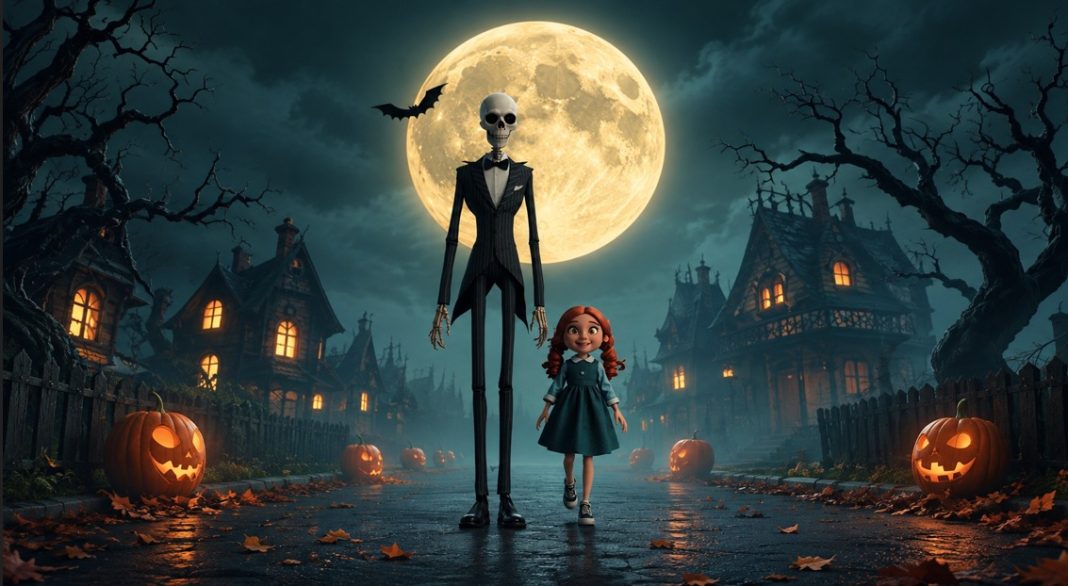
Few films have haunted and charmed audiences the way The Nightmare Before Christmas has. Over three decades after its 1993 release, Jack Skellington is still a fixture of Halloween decorations, holiday playlists, and fan tattoos. So when a new adventure set in this world arrives, it carries a big question: does it belong in the larger story of Tim Burton’s creative legacy? At Ultimate Fandom, we think the answer is a confident yes, and here is why.
Watch this Movie Trailer Below:
The Origins of Halloween Town
To see how a new adventure fits, you first need to remember where the original came from. The Nightmare Before Christmas began as a poem Tim Burton wrote while working as an animator at Disney in the early 1980s. The idea was simple and strange: the Pumpkin King of Halloween Town stumbles into Christmas Town and becomes obsessed with the holiday.
Burton produced the film, while director Henry Selick brought the stop-motion world to life. Danny Elfman, Burton’s longtime collaborator, wrote the songs and gave Jack his singing voice. That combination of Burton’s vision, Selick’s craftsmanship, and Elfman’s music made the film feel handmade, emotional, and unlike anything else in animation.
This is the foundation any new adventure has to respect. Halloween Town isn’t just a spooky backdrop. It is a world built on Burton’s belief that the strange and the creepy deserve tenderness.
The Themes That Define Tim Burton
Burton’s filmography keeps returning to the same ideas. Edward Scissorhands gave us a gentle outsider with blades for hands. Beetlejuice turned the afterlife into a chaotic comedy. Corpse Bride found romance among the dead, and Frankenweenie showed that love can make a boy defy death itself. More recently, Wednesday and Beetlejuice Beetlejuice proved that his gothic sensibility still resonates with new generations.
Underneath the macabre imagery sit a few consistent themes:
- Outsiders deserve belonging. Burton’s heroes are misfits who just want to be understood.
- Death isn’t the enemy. In his worlds, skeletons sing, ghosts joke, and the afterlife can be warmer than the suburbs.
- Creativity is both gift and risk. Jack’s passion for Christmas is brilliant and dangerous at once.
- Beauty hides in the strange. Twisted trees, spiral hills, and striped suits are all part of the charm.
A new Nightmare Before Christmas adventure fits Burton’s legacy when it carries these ideas forward instead of simply recycling familiar imagery.
Why Jack Skellington Is the Perfect Burton Hero
Jack is arguably the most complete expression of Burton’s worldview. He is the best at what he does, yet he feels empty. He hungers for meaning, finds it in something unfamiliar, and nearly ruins it through enthusiasm without understanding. Burton characters are rarely villains or saints. They are flawed dreamers, and Jack is the ultimate example.
That is why Jack works so well as a character for new stories. His arc, from restlessness to misguided ambition to humble self-acceptance, can be revisited from many angles. A fresh adventure can explore what comes after he learns to embrace who he is, or what it means for a hero to protect a world he once wanted to escape. Those questions keep him relevant, and they are exactly the sort of emotional territory Burton has always cared about.
Honoring the Look and Sound
Part of Burton’s legacy is visual. The spindly figures, high-contrast palettes, and crooked architecture are as recognizable as any signature. Equally important is the music. Elfman’s theatrical, slightly eerie scores turn Burton’s films into experiences you can hum.
A worthy new adventure needs to honor both. That does not mean copying the original frame by frame. It means understanding the principles behind the design: exaggerated shapes, handcrafted texture, and a sense that every object in the frame has a personality. The same goes for sound, where whimsy and menace should coexist. Fans can tell quickly when a project grasps this and when it only borrows the surface.
Why New Adventures Matter for Burton’s Legacy
Some people worry that expanding a beloved classic risks diluting it. It is a fair concern, but legacies are not preserved by leaving them untouched. They stay alive when new storytellers and new audiences engage with them.
Burton’s own career shows this. He revisited Beetlejuice decades later, returned to stop-motion with Corpse Bride, and expanded Frankenweenie from a short into a feature. His work has always been a conversation with itself. A new Nightmare Before Christmas adventure continues that conversation, giving younger viewers an entry point while rewarding longtime fans.
There is also a practical benefit. Each new project sends curious viewers back to the 1993 original, along with Corpse Bride, Coraline, and Burton’s other animated work. At Ultimate Fandom, we love seeing how one new release can spark a rewatch marathon across an entire creative universe.
The Fan Community Keeps the Legacy Alive
A legacy is not only what a creator makes. It is also what fans do with it. The Nightmare Before Christmas community is one of the most devoted in pop culture. People host annual watch parties, build elaborate Halloween Town displays, cosplay as Sally and Oogie Boogie, and debate whether it is a Halloween movie or a Christmas movie.
That passion is part of why a new adventure carries weight. Fans bring expectations, but they also bring generosity toward projects that clearly come from love. The strongest additions to this world will be the ones made with the same care that fans put into their own tributes. Ultimate Fandom exists to celebrate exactly this kind of energy, and the community’s enthusiasm is the best argument that Burton’s creations still matter.
What a Fitting New Adventure Looks Like
So what does it take for a new adventure to belong in Burton’s legacy? A few qualities stand out:
- Emotional honesty. The story should care about its characters, not just its aesthetics.
- Respect for the original tone. Dark but never cruel, funny but never cynical.
- Craft over shortcuts. The handmade quality that defines Burton-world animation should remain visible.
- Room for newcomers. It should welcome first-time viewers without alienating longtime fans.
- A fresh idea. A sequel or spin-off needs its own reason to exist beyond nostalgia.
When a project meets these standards, it does not compete with the original. It joins it, widening the world that Burton, Selick, and Elfman began building decades ago.
Final Thoughts
A new Nightmare Before Christmas adventure fits Tim Burton’s legacy because the original was always about transformation, curiosity, and finding a home in a world that does not quite understand you. Those ideas have no expiration date. As long as new stories keep that heart beating beneath the stitched-up surface, Halloween Town will keep growing.
For more deep dives into film, fandom, and the stories that shape pop culture, keep exploring Ultimate Fandom, where every fan’s passion has a place.
FAQs
Did Tim Burton direct The Nightmare Before Christmas?
No. Henry Selick directed the film, while Tim Burton created the original story and characters and served as producer. His creative fingerprints are all over the final result.
Why is The Nightmare Before Christmas considered part of Tim Burton’s legacy?
It reflects his core themes: outsiders, the beauty of the macabre, and the blending of death with whimsy. It is also one of his most beloved and enduring creations.
Is The Nightmare Before Christmas a Halloween or Christmas movie?
Both, and fans love debating it. The story literally spans the two holidays, which is a big part of its lasting appeal.
Can new stories in this world work without Tim Burton directly involved?
Yes, if they respect the original tone, visuals, and emotional core. Burton’s own career shows how worlds can grow through new projects and collaborators.
What makes Jack Skellington such a lasting character?
Jack is ambitious, flawed, and deeply relatable. His search for meaning and his journey toward self-acceptance give him emotional depth that works for audiences of every age.