
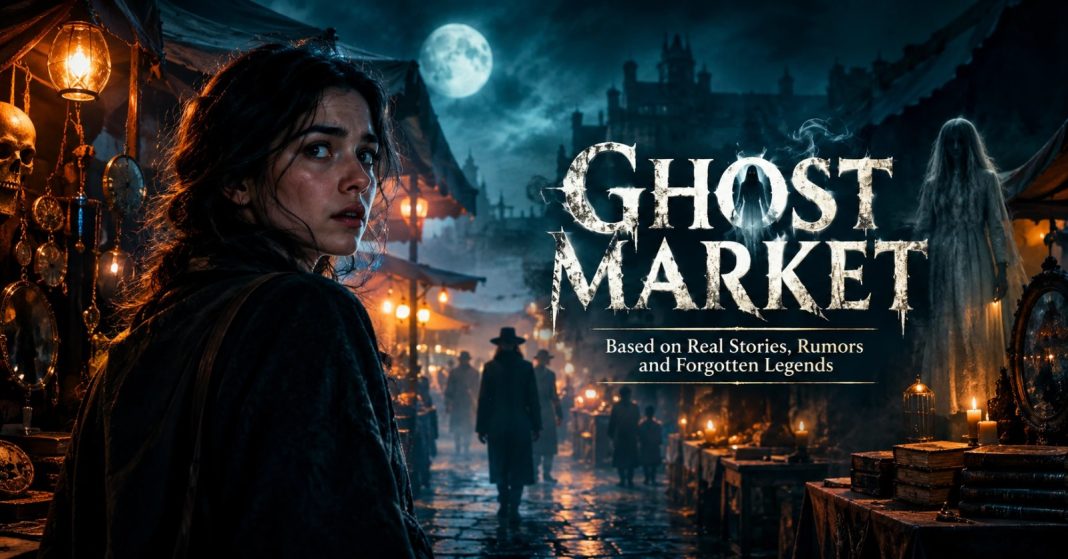
Where lantern light flickers, the living and the lost still trade in whispers.
Every culture has a place it warns children to avoid after dark. In much of East Asia, that place is the ghost market: a bazaar said to appear in the hour before dawn, where stalls glow with dim lanterns, vendors never quite show their faces, and the currency is not always coins. Some call it superstition. Others swear a grandmother, an uncle, or a neighbor once wandered in. At Ultimate Fandom, we love stories that live in the gray space between history and myth, and few are as haunting as this one.
Watch this Movie Trailer Below:
I. The Whisper Before Dawn
The idea of a spirit marketplace is older than most people realize. Chinese folklore speaks of guishi (鬼市), literally “ghost market,” where the dead are believed to buy and sell much as the living do. Classic story collections, such as Pu Songling’s Strange Tales from a Chinese Studio, are full of travelers who stumble into eerie gatherings that vanish with the sunrise.
The pattern rarely changes. A lost wanderer meets a crowd that is too quiet. A purchase turns to ash by morning. The stories echo a universal fear: the world keeps going without us, and something else keeps shop while we sleep.
II. The Market That Truly Existed
Here is where legend meets record. In old Beijing and other Chinese cities, a real pre-dawn market earned the nickname “ghost market.” Traders gathered in darkness, selling second-hand goods, antiques, and items of uncertain origin. Buyers carried little light, partly to hide their faces, and bargaining happened in murmurs.
The darkness was practical. Some sellers were offloading stolen goods, and others were parting with family heirlooms they were ashamed to sell openly. To a passerby, silent figures haggling by faint lamps looked otherworldly, so the name stuck. Accounts vary by city and era, but the core idea holds: history explains the scene, and folklore supplies the shiver.
Similar hidden dawn markets, often called thieves’ markets, appeared in cities around the world. The “ghost” in the name was often less about the dead than about the hidden.
III. The Unwritten Rules of the Spirit Bazaar
Storytellers pass down warnings, though they differ from region to region. These are the ones that come up most often:
- Do not look back. If someone calls your name from behind, keep walking.
- Never haggle too hard. Spirits are said to take offense at greed.
- Refuse what is freely offered. A “gift” from the other side can come with a debt.
- Check your change. Coins that crumble into paper offerings are the classic sign you traded with the dead.
- Leave before the first rooster crows. Dawn closes the market, and anyone still inside may not leave.
These rules work as folk wisdom. They teach caution about night, strangers, and temptation, and so they carry real social meaning even when the ghosts are metaphorical.
IV. When the Gates Open: The Hungry Ghost Festival
No conversation about spirit markets is complete without the Hungry Ghost Festival, observed in the seventh lunar month in Chinese Buddhist and Taoist traditions. Families burn joss paper, set out food, and light incense to comfort wandering spirits.
In places such as Singapore and Taiwan, street performances are staged with the front rows left empty for unseen guests. It is a beautiful blend of fear and hospitality. The living do not drive the ghosts away; they invite them, feed them, and ask them to leave in peace.
Seen this way, the ghost market is the festival’s shadow twin. One is a ritual of welcome. The other is a cautionary tale about what happens when a mortal wanders into a place built for the dead.
V. Rumors Reborn in the Digital Age
Folklore never dies; it changes platforms. Today, ghost market tales spread through late-night forum threads, short videos, and group chats. A cousin’s friend heard a bell in an empty alley. A taxi driver once refused a fare to a lantern-lit street. Details shift with every retelling, which is exactly how legends have always survived.
This is part of why communities like Ultimate Fandom matter. When readers share and debate these stories, they act as modern keepers of oral tradition, preserving what might otherwise fade. A well-told rumor is a living archive, and the best storytellers are honest about what is documented and what is whispered.
It is worth practicing that honesty. Separating the verifiable (real dawn markets, real festivals) from the legendary (vendors with no faces) does not weaken the stories. It makes them stronger. The facts give the legend a floor to stand on.
VI. Why We Still Wander Back
Why does the ghost market keep its grip on us? Perhaps because it holds up a mirror. We are drawn to places that exist only briefly, that ask something of us, and that vanish before we can fully understand them. Anyone who has walked an empty street at 4 a.m. knows the feeling that something just out of sight is awake.
For readers who love folklore, the ghost market offers all the best ingredients: mystery, ritual, moral lessons, and a touch of dread. When you read about it at Ultimate Fandom, you are joining a long line of listeners who gathered around a fire to hear what happens to those who stay too late.
Closing Thoughts: Leave a Light On
The ghost market reminds us that the most lasting stories are the ones we are slightly afraid to finish. It began as a real marketplace in the dark, grew into legend, and is now being retold across screens and generations. Whether you believe in spirits or only in storytellers, the lesson is the same: be curious, be respectful, and know when to head home before dawn.
If you enjoyed this journey through folklore, keep exploring with Ultimate Fandom, where every legend gets a place to live on.
FAQs
Is the ghost market real?
Partly. Pre-dawn markets nicknamed “ghost markets” did operate in parts of China, trading in second-hand and sometimes questionable goods. The supernatural version, run by spirits, belongs to folklore.
What is supposedly sold at a ghost market?
Stories mention antiques, silks, food, trinkets, and even years of a person’s life. Items often turn out to be paper, leaves, or ashes by morning.
Is the ghost market linked to the Hungry Ghost Festival?
They share a worldview. Both rest on the belief that spirits move among the living at certain times, but the festival is a living ritual while the market is mostly a legend.
Do other cultures have similar spirit markets?
Yes, in different forms. Japan’s tales of the Night Parade of One Hundred Demons describe a procession of spirits through the streets, and Mexico’s Día de Muertos markets sell offerings for returning souls. Many cultures imagine a place where the living and dead meet.
How can I explore these legends respectfully?
Treat them as cultural heritage rather than pure entertainment. Credit the traditions they come from, avoid mocking the beliefs of those who observe them, and clearly separate documented history from rumor in your own retellings.